Monday, March 31, 2014

Italy Top 10: Kristen

And here is my list. . . 

1. Florence
2. Rome
3. Plitvice
4. bike in carso to Slovenia
5. go back to Cristian’s one more time
6. eat GOOD fish in a restaurant
7. gelato in Udine
8. paddle as close to Trieste as possible
9. jump off high rock in Duino

10. visit relatives in Germany

Just over 3 months. . . we'll see how many we get to!

Italy Top 10: Tom

Our time remaining in Italy is winding down so Kristen and I decided we should make a list of the top 10 things we want to do before we move back to the US. We each did our own list, in no particular order, and then compared them. We shared five things and each had five of our own...so that's fifteen things we will try to do before our move!

Here's my list:

1. Summit Triglav (the highest peak in Slovenia)
2. Hike in Plitvice (in Croatia)
3. Capital Tour: Vienna-Bratislava-Budapest-Zagreb-Ljubljana (5 capitals within 5 hours)
4. Find 3 Birds: Wallcreeper, Roller, Collared Pratincole
5. Weekend in Florence
6. Surf the Ligurian Coast
7. Go to Rome
8. Return to Venice
9. Climb Monte San Mauro (in the Dolomites)
10. Paddle to Trieste


Friday, March 28, 2014

Speaking Italian

So I realized something today...nobody in this part of Italy is ever going to understand me when I speak Italian. I had an epiphany at a gas station this morning trying to have a simple conversation with the attendant, and I finally think I know why nobody seems to understand me.

I've been studying Italian pretty regularly using Rosetta Stone. The software has really helped me with my vocabulary and reading, but it's done nothing for my speaking. Part of this is that I often turn off the voice recognition because it kind of stinks (the one bad thing about the software). But I think there's a bigger reason why people don't understand me. I'm listening to REAL Italian when I do my daily lessons. But people in Italy speak all kinds of different Italian in the form of "dialects".

So when I'm listening to people I find myself trying to hear if they are speaking dialect or Italian or something in between. I can often hear the Triestino dialect now, but in the time it takes me to realize they are speaking this instead of Italian I get lost in the conversation. Then when I speak it often comes out wrong, or they just don't understand me because...well...I'm speaking Italian.

My absolute favorite example of my frustration speaking to people is saying the number 2. "Due" in Italian. Pronounced "doo-ay" ("ay", like in "day"). Simple right?? But in Trieste they say "doo-uh". OK, fine...I get it. I'll just say "doo-uh" when I try to order 2 cappuccini. But then they look at me confused and ask: "doo-ay" (read: "do you mean doo-ay)? But when I ask for "doo-ay" cappuccini they look at me confused and say: "tre" (which is 3...pronounced "tray")? Ugghhh!!!

Today at the gas station I tried to get "venti Euro" ($20). If you've been to Starbuck's, you know how to pronounce "venti" right? Simple enough. The attendant looks at me confused (as usual) and says: "pieno" (full)? I say: "no, solo venti" (no, only 20). He says "si, benzina" (yes, gas). I say something like: "io voglio solo venti Euro di benzina" (I only want $20 of gas). He says: "si, pieno" (yes, full). Usually, this is where Kristen and I give up and just take whatever we get! But today I was determined to only get $20 in gas. This went back and forth for like 5 minutes before he finally says: "ohhhh, venti Euro". I have no idea what I said or how I said it that he finally understood me!

By the way...we don't have this problem speaking outside of the Trieste area in case anyone is interested. Ah, Italy.

Friday, March 21, 2014

Farfalle del Carso

Butterflies are out in full force up in the Carso right now! Spring is arriving fast...wildflowers have exploded on the rocky hills above Duino bringing a welcome end to our dreary winter.

The Speckled Wood Butterly is the most abundant one for sure. Everywhere you walk they are sitting on stones on the trails warming up in the springtime sun.


Green-veined Whites are also super abundant. You'll find tons of them flickering in the sun anywhere you find blooming flowers. They seem to really like anything purple, typical of most butterflies. From the top these butterflies aren't all that special, just plain white mostly, but the underside of their wings is patterned with green and yellow.


Another butterfly with really different coloration on the top and bottom of its wings is the appropriately named Orange Tip. This very small butterfly is often seen fluttering down the trails with its orange wings glowing against the grey rocks of the Carso, but you seldom see them being still for long. I was lucky to find this one feeding on the same purple flowers that were full of Green-veined Whites.


Common Brimstones are another butterfly that doesn't like to stay still long. Most of the time they are a flashing blur or a distant patch of yellow-green on purple flowers. Once in a while they might happen to land in front of your lens for a lucky closeup.

Wednesday, March 19, 2014

Palermo

Take a walk with us down the streets of Palermo. We spent a beautiful day there on our trip to Sicily just wandering around the streets, shopping, marveling at statues and eating (of course). Here are a few photos so you can take in i sapori di Palermo!

Kristen described the city as "gritty", which I think is a perfect word for Palermo. A bit dirty and worn out on the surface, the city has a beautiful charm nonetheless. Built almost 3,000 years ago by the Phoenicians, it has changed hands many times as a plethora of ancient civilizations conquered Sicily.


Like across the rest of Sicily, each of these civilizations made their own mark on the city of Palermo. As a result the architecture spans the ages...a really great place to study historic architectural styles. The streets didn't feel like other Italian cities that we've visited. The multi-cultural influences in Palermo make the city quite unique, with Gothic and Baroque buildings mixed in with Roman and Greek statues, and Moroccan-style souks on narrow marble-stoned streets.


Over the ages Palermo has been one of the world's most important cities. It was once the largest city in the Arab world. During the 13th Century, it was considered the most important city in Europe. Situated at the crossroads of the major sea trade routes between Asia, Africa and Europe, Palermo was in the perfect location for commerce. At one time, most of the world's coffee, salt and silk likely passed through this small port city.


Back to the food for a minute...after all it was one of the best things about Sicily (and Palermo). Kristen already talked about the restaurants, but the food in the street markets was amazing too! Walking in the street markets in Palermo really reminded of the time I spent in the souks of Marrakech, Morocco. The market we liked best was in one of the supposedly worst parts of the city. It was kind of dirty, even by Palermo standards, and had an edgy feel on the dark streets with graffiti on the building walls. But just look at all the goodies that you could buy! We bought some famous Sicilian sun-dried tomatoes (the tomatoes in Sicily are unlike any you've ever eaten before), ground pistachios (a staple in many dishes) and some bottarga di tonno (salted and dried tuna roe).


Two words of caution about Palermo if you go. First, DON'T DRIVE in the city!! We can't stress this enough!! It was complete chaos. Worst place in the world we've driven (yes...worse than NJ/NY by a mile), maybe with the exception of the Dominican Republic (a story for another time). If you do make the mistake of driving into city center, parking is quite an experience. Not just because spots are nearly impossible to find, but because you'll have to pay the parking pizzo. This would be your friendly "protection" money paid to some random guy working on the street who, we assume, is in the Mafia. On a positive note, the pizzo was less expensive than the parking meters (he took the money "instead" of us putting it in a meter...and to our pleasant surprise our car wasn't towed or ticketed).

The second word of caution about visiting Palermo: you will EAT TOO MUCH!


Monday, March 17, 2014

Segesta (a History of Sicily)

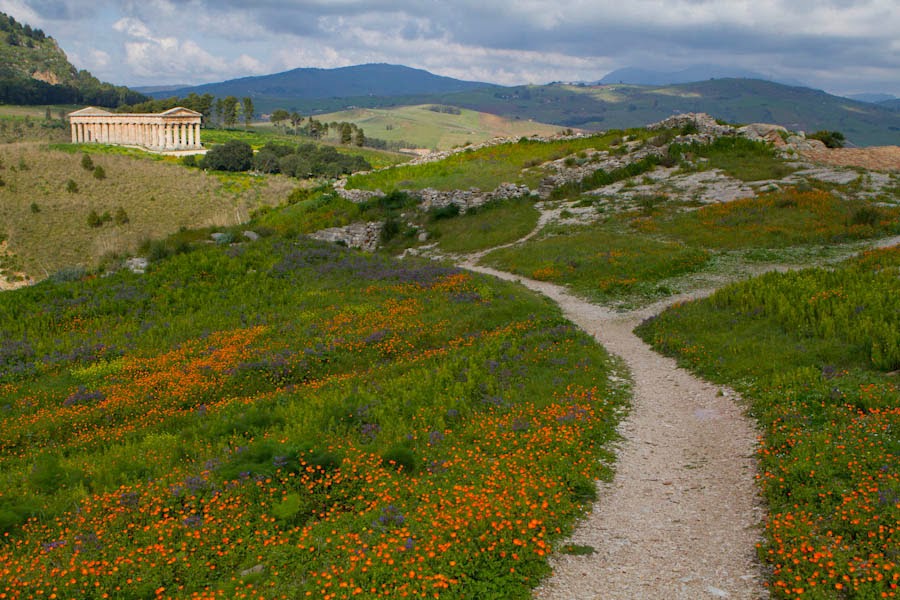
If you've read our previous blog post - Sicily (Cultural Edition) - you know that the island has a long history of influence by different cultures. One visit to the ruins at Segesta and you get to experience most of the major cultural influences in one place! Segesta is situated on a small mountain surrounded by rolling hills, a high point in the area that was the perfect place to build temples.


It all started with cave-dwellers about 3000 years ago. The early Sicilians came from what is now mainland Italy and from Africa. In Segesta these early settlers built into the lower part of the hill living in homes that look like Native American cliff-dwellings in the southwest. The city that rose became one of the most important cities of the Elymian people (descendants of the Trojans) during the bronze age.


By 700 BC the Greeks had taken control of Sicily and began the task of building the many Greek temples found across the island. The Greeks built their city directly above the lower cave-dwellings of the Elymians. So as you walk up the trail at Segesta you quickly enter into a new world as if you had sailed across the Ionian Sea directly to Greece! This enormous Greek temple is one of the showpieces at Segesta.


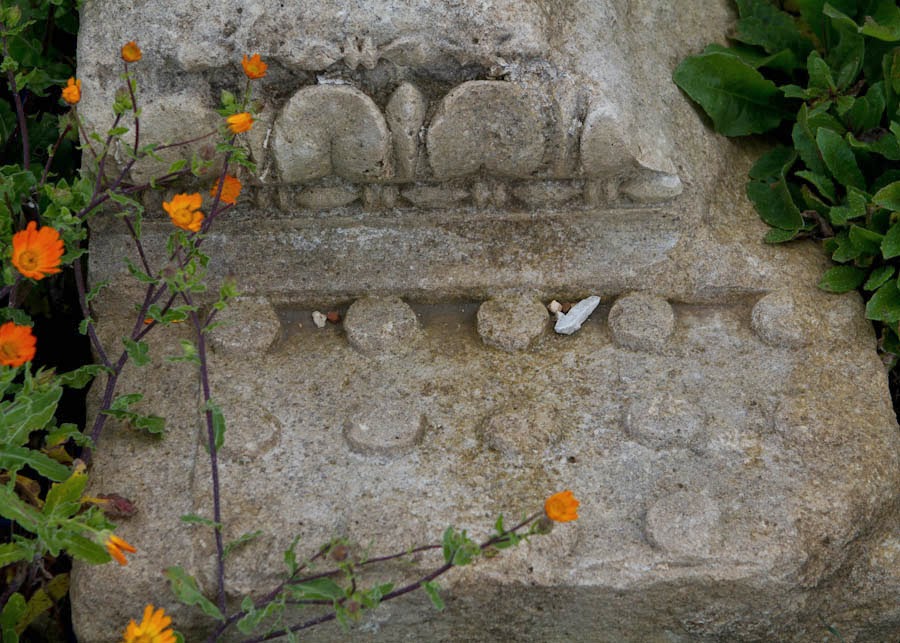
A little bit further up the trail and it all changes again as quickly as the Greek temple rose above the cave-dwellings. By 260 BC the Romans had conquered Sicily and began building their own cities and temples, where else, directly above the Greek city at Segesta. It was fascinating watching the engravings in the stones along the trail change from Greek to Roman. A walk through history on one short trail up a small hill.

At the top of the hill, the Roman influence slams you in the face the way the Greek temple did further down the trail. At the summit stands a very well-preserved Roman amphitheater! Once again you're immediately transported to another time and place. Only in Sicily can you see such striking examples of these great ancient cultures in one place on a single hillside.


But it doesn't end here. Remember, the Normans and Arabs also conquered Sicily at different times in history and stamped their own influences on the developing Sicilian culture. Standing next to the Roman amphitheater at the top of Segesta is a Muslim mosque built directly on top of the Roman ruins. Well, technically, the Muslims built their mosque on top of the Norman city that was built on top of the Roman ruins.

So the entire history of Sicily can be experienced along a single trail up a small hill. A one hour walk through history. One of our favorite experiences in Italy so far!


Friday, March 14, 2014

Riserva Naturale dello Zingaro

Here are some photos from our day hiking at Riserva Naturale dello Zingaro. Our hike took us along the west coast of Sicily in one of the few undeveloped areas on the island. The locals protested to keep a road from being constructed here and had the land designated a natural area ensuring that this part of the coast remains protected. The birding was terrific...we saw two very sought after birds in Sicily: Bonelli's Eagle and Lanner Falcon. The first two photos show how unpredictable the weather is in Sicily in March. We had to wait until a thunderstorm passed before we could enter the park, then had a blue sky for most of our hike, only to get caught in a hail storm on our way out!

Enjoy the photos...
Tunnel entrance to Zingaro

Riserva Naturale dello Zingaro!

One of the beaches along the trail

Our restaurant for lunch

Waterfront (rocky) table

Having fun!

Beachcombing

Testing the (cold!) water

Back to the trail

Flowery trail
Wildflowers in full bloom

Some different plants: cactus

The view along the trail

Ciao from Zingaro!